“What happened?!”
The year is 2022. It’s May and Elon Musk is trying to squirm his way out of buying Twitter after offering the ridiculous amount of $44 billion. Some people wanted him to get over it and just buy the thing, like he said he would (the people that were about to make serious bank!), while others thought it would be a complete disaster. Turns out it was only a little bit of a disaster. The world didn’t end, but net neutrality kind of did, through the back door. Let me explain…
“Net Neu-what?”
In the early 2010’s the big bad cable companies in the US wanted to throttle the internet, restricting it so only those that could pay top tier would get fast speeds and the rest of us poor people would be stuck with something slightly faster than dialup (who remembers that, lol). Anyway, society gave that idea a big fat slap in the face, and it scurried away back to the dark depths from whence it came. Hurray!!! Or so we thought it did. Turns out, the ghost of John D. Rockefeller had another idea. Instead of restricting access to people to see the internet, they would restrict the reach of people writing on the internet. That way knowledge would be seen and controlled from the people that could pay.
“What are you even talking about!?”
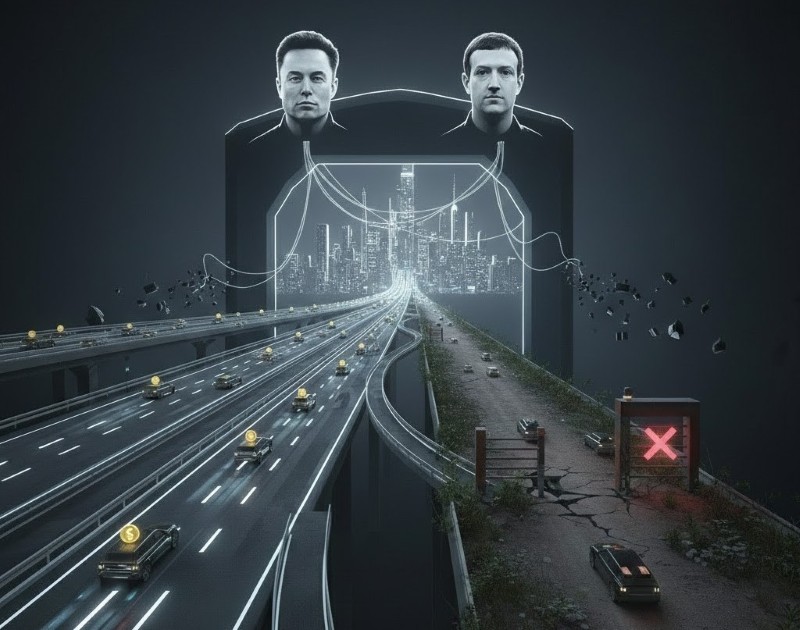
...I hear someone shout, looking up from their doom scrolling, while sat on the toilet. Well, let me continue to explain. In 2022, after Elon X’d Twitter, he started to charge for verification. This turned into payment, not just to "verify" who you were (or who you definitely were not, in many cases), but also payment for your posts to reach more than the number of people familiar with your underwear drawer (about 2?). As soon as Elon did that, Zuck was like, “Me too!”. So Facebook and Instagram, also did the thing.
“But that’s nothing to do with net neutrality..."
OK, just listen! The essence of net neutrality was never about the money. It was the freedom to access all the parts of the internet and about that access being the same for everyone, whoever you were. With social media pay-to-play, the restriction is not on the consumer, it's now on the creator. Those that don’t pay don’t get views, unless their focus is entertainment: catching the attention of viewers within 3 seconds; sticking to that formula of hook - line - sinker; the creator showing their face; making it rugged; sitting in your car...
Not everything should need to be entertainment. But unfortunately, if you just have information or advice that you want to share, and the first 3 people that see it think it’s boring, it dies. The information, that would have been valuable to thousands, never gets through.
“Ok, so this has nothing to do with education, though...”
What does it mean for education? It means that it's harder to find authentic information. It could be out there, but will just rot in solitude due to lack of funds or "entertainment value". For students in school, who shouldn't be using social media anyway, it probably won’t make much difference. But for the teacher doing research for their class prep; the person trying to find the best bargain or review on a product; for the person looking for someone who shares their interest in a niche hobby, the landscape is much more difficult. We have all used social media for learning new things. It has been hard for a while, but now…harder.
“Does it even cost that much?”
Let’s take a closer look at what is on offer.
On X
- $3 doesn’t even get you extra reach! Just some basic features like editing posts
- $8 get’s you 4x visibility
- $40 gives you 15x visibility
On Meta (FB and Insta)
- $15 gives you optimized search result locations and access to the for you areas of people’s feeds.
These are monthly costs which add up, and for many, cost more than they can afford. This is just to share information! Linkedin and TikTok focus on boosters for posts, so is more pay-as-you-go. But their algorithms over the last few years have definitely reduced the number of organic viewers seeing your posts, in favour of people paying for visibility, and many have noticed. You pay nothing, you get nothing.
“But there IS some good in it, right?”
Do the arguments in favour of doing this hold any weight? Spoiler alert: the answer is no! One reason is that using payments eliminates the presence of the bots that plagued many of the sites, but it turns out that this has not worked at all. In fact it is now worse. For many organisations responsible for the plague of bots, the new cost was seen as negligible compared to the profits they made from scamming.
Another reason was that allowing anyone to authenticate was a good thing and gave more people a sense of ownership, increasing user satisfaction. We all know how that went! Remember the random guy that registered and got a gold checkmark for @DisneyJuniorUK (with no affiliation to Disney at all!) and then started posting racial slurs and lies about Disney shows? No? Well, that happened and more! Bad actors who paid for checkmarks just meant that they had more of an image of authenticity to conduct their nefarious acts, which increased their effectiveness. All the system did was prioritise the rich bots and their spam over poor humans with a real message to share.
There is also an argument that it has encouraged people to make more interesting posts. But it seems like the algorithms appeal to our more base instincts, that yearn for low quality rubbish, prioritising negativity and conflict. They don’t call it ‘Doom Scrolling’ for nothing!
“Is this the end?”
So, what do we do about it? I'll save that message for another day. For now, let’s wallow in sadness and pour a sip on the street for what we lost, while we plan our revenge.
Image by Gemini