
In my last post, I talked about my new course, Introduction to Cybersecurity and Ethical Hacking for High School, which is a course bringing together some great online resources to educate students on what goes on behind the scenes in the digital world. My course is only a basic introduction to cybersecurity. So what do you do when you complete the 11 lessons and the final test? Well, you could always continue going through the Cylab Academy challenges, and continue playing ThreatGen Red vs Blue, but there is so much more out there to have fun with. On my research journey to create my course, I came across some other great resources which I wanted to share, for those that want much more than my short intro.
- Details
Read more: Cybersecurity and Digital Safety Education Resources for K-12
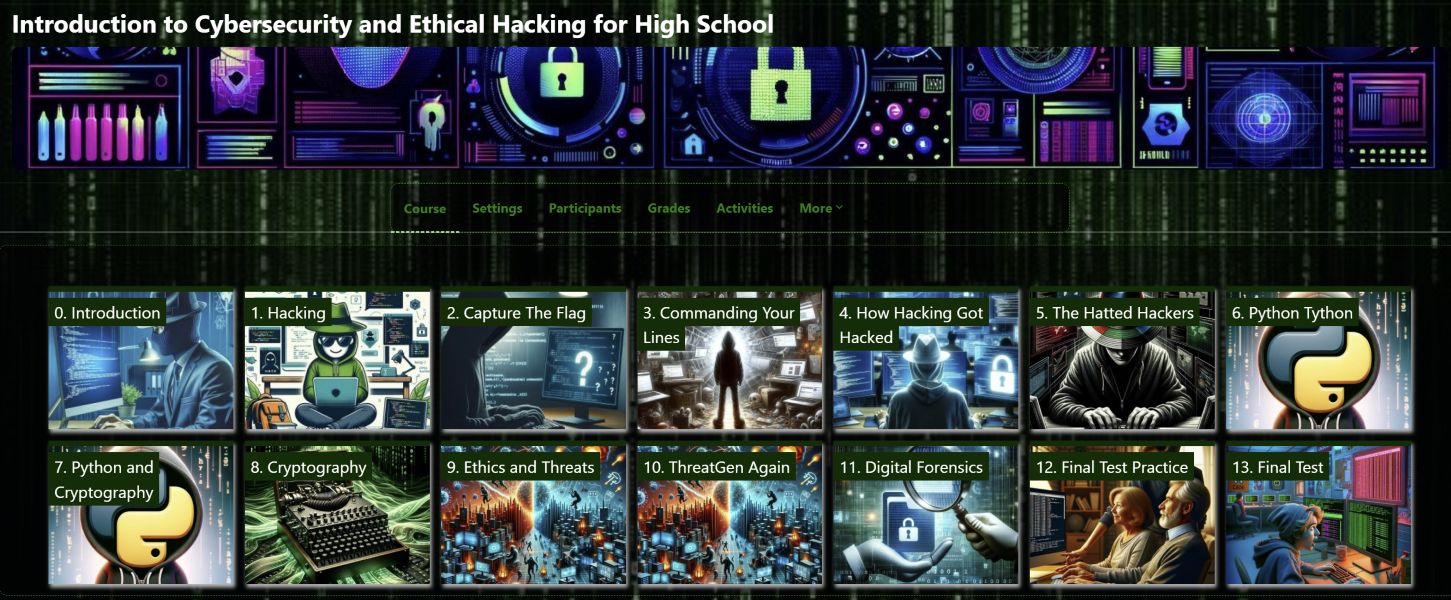
A few years ago, I was asked to come up with a cybersecurity course for secondary school students. As there are already a lot of great online resources for this, my first port of call was to see what the landscape was and whether the quality was good enough. The truth is, there is already a good amount of great stuff, but nothing short enough for what I was tasked with. A 14-lesson course spread over seven weeks is just not enough time to get into the detailed technical aspects of security, hacking and defending yourself online. So I decided to do a bit of everything and give the students a taster, hopefully giving them enough interest over the seven weeks for them to want to delve in deeper on their own. This became the ‘Introduction to Cybersecurity and Ethical Hacking’ course. The course is housed on Moodle, is freely accessible and features a collection of great free and paid online resources, from Cylab Security Academy, Netsim network simulator, GCHQ’s CyberChef cryptography web app and ThreatGen Red vs Blue hacking simulator game.
- Details
Read more: Introduction to Cybersecurity and Ethical Hacking Course
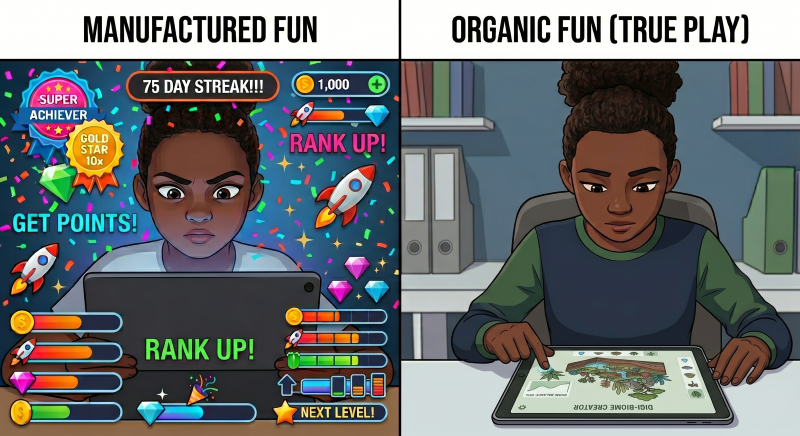
Edtech apps have taken over classrooms at an alarming pace, but do we really understand how the motivating factors and learning components within apps are actually working? As a teacher, parent or homeschooler, how do you choose which app is best for your child or student? Many of us tend to go with the one that looks the best or seems the most engaging, but is that really the best for learning and development?
Yes, play is important for learning, but many of the apps don’t really utilize true play, in the context of learning and development. It also seems like they are mistaking fun, motivating gamification mechanics for helpful learning mechanics. The truth is, some apps can do more harm than good. In this article, I want to break down and properly define the different types of fun and play and how they factor into learning and development...
- Details
Read more: Are EdTech Apps Actually Teaching, or Just Entertaining?

“What happened?!”
The year is 2022. It’s May and Elon Musk is trying to squirm his way out of buying Twitter after offering the ridiculous amount of $44 billion. Some people wanted him to get over it and just buy the thing, like he said he would (the people that were about to make serious bank!), while others thought it would be a complete disaster. Turns out it was only a little bit of a disaster. The world didn’t end, but net neutrality kind of did, through the back door. Let me explain…
- Details
Read more: We lost the net neutrality battle and we didn’t even notice!
Why our education systems are the Wrong Software for Neurodivergent Hardware.
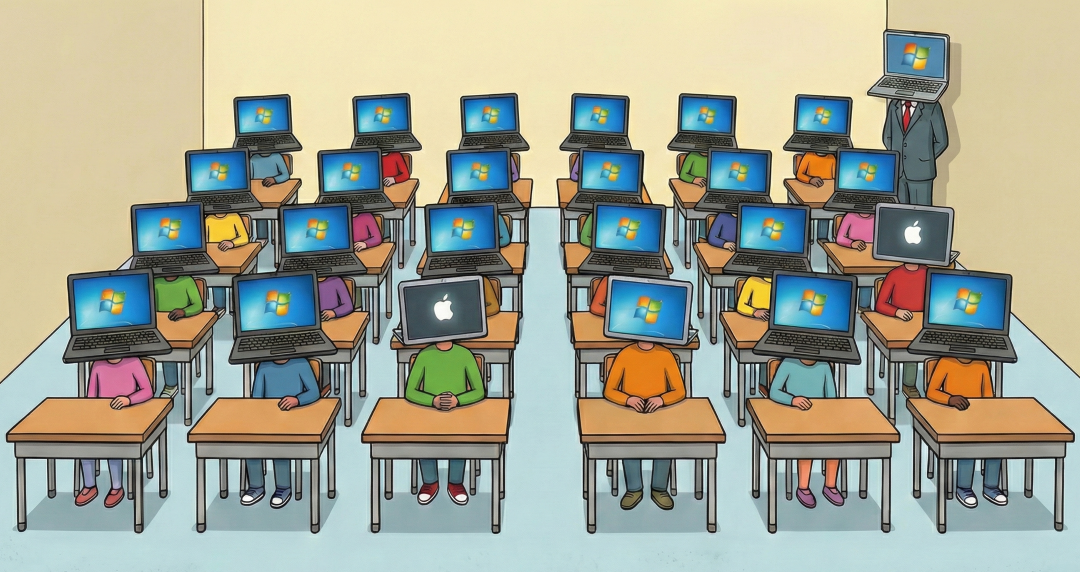
Picture the education system as a piece of software only designed to run on Windows PC students, but 10% of students run on Mac. The education system software doesn’t run natively on Macs so needs to use a virtual machine, special software that pretends to be a Windows PC. It works, but with overheads, like using more RAM, processor and hard disk resources. In this scenario, the Mac is the neurodivergent mind, which needs to adapt to the education system designed for different hardware and in turn takes more effort than others to do the same thing. The perfect solution would be for that software company to make a universal app that works on all systems, natively.
Using the Mac/PC comparison to describe neurodiversity is not my idea, and definitely not new (check out this post and article). But it's a great way to describe how it is. We are still seeing and hearing about ADHD and Dyslexia simply as learning ‘Disabilities’, but another narrative also exists. With roughly 10% of the global population being affected by dyslexia, and with evidence of certain unique abilities, it should really be seen as a natural difference rather than a niche disability. And with large overlaps with ADHD, the same sentiment applies to that too. Let’s look at it differently.
- Details
Read more: Your Neurodivergent Child Isn’t Broken — They’re Just Running MacOS in a Windows World
With nearly a billion registered users globally, AI's reach is undeniable. Yet, if half of its training data is in only one language, how truly 'global' can its educational impact be?
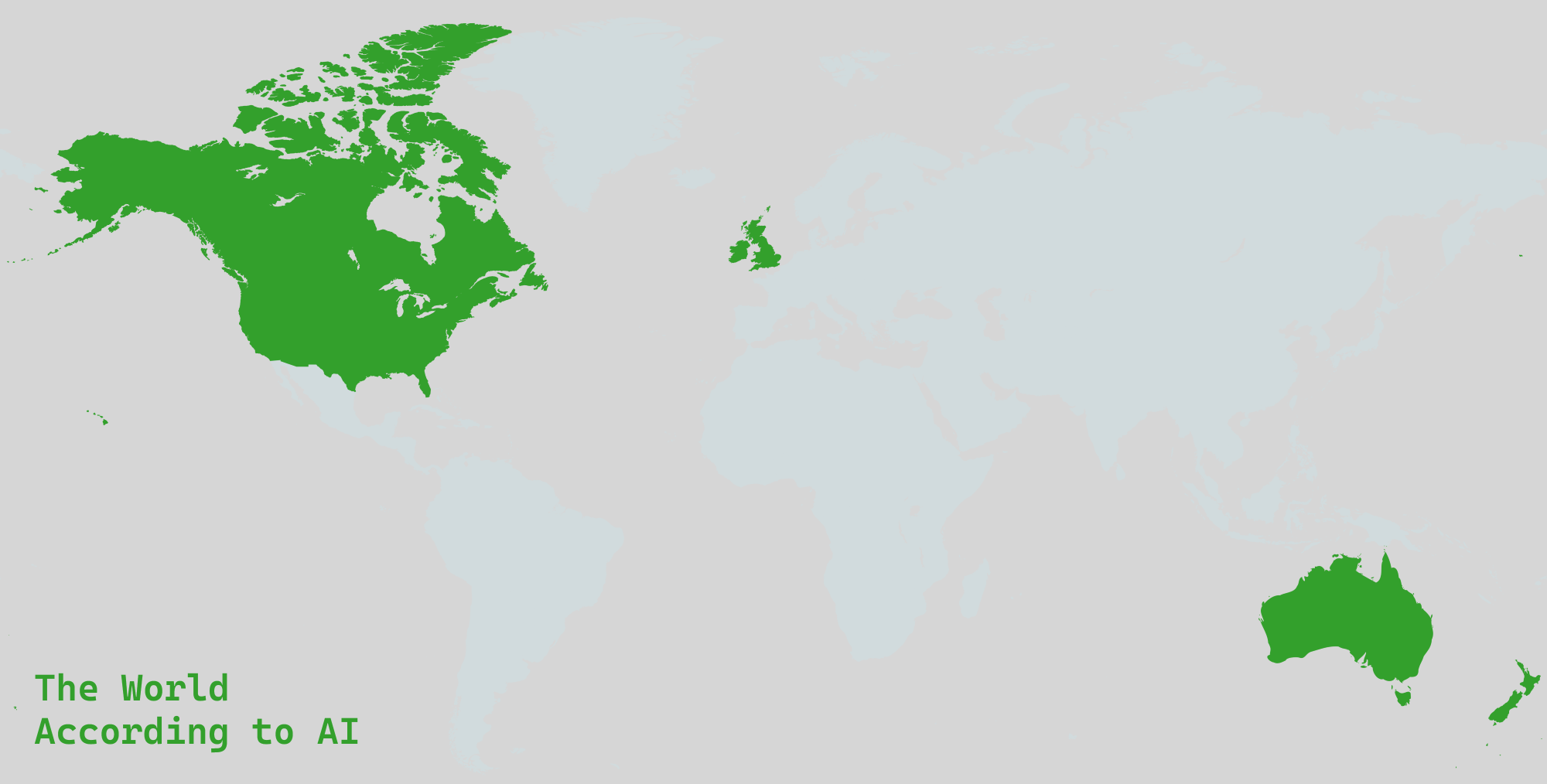
Imagine an AI chatbot designed by the best tech companies to teach, but it accidentally makes stereotypes worse or gives inaccurate feedback to a student. This issue is more pervasive than we think and is related to cultural bias in the fast-growing world of AI. There are over 200 countries in the world and we collectively speak over 7000 languages. But a majority of the AI models that we are using, from Google, OpenAI and Anthropic are all generated in just one country, the US, with half of its training data in only one language, English. And these provide information and generate billions of responses to people all over the world.
So I ask: Can a model trained in the US create culturally relevant educational material for secondary students in rural India?
The answer: Not to the same quality it can for materials aimed at students in Urban USA.
The reason: bias on multiple levels.
And unless we pay attention to it, the situation isn’t going to get better. First we need to understand the issue in detail…
- Details
Read more: Gen AI’s Culture Bias Problem: What You Need to Know!
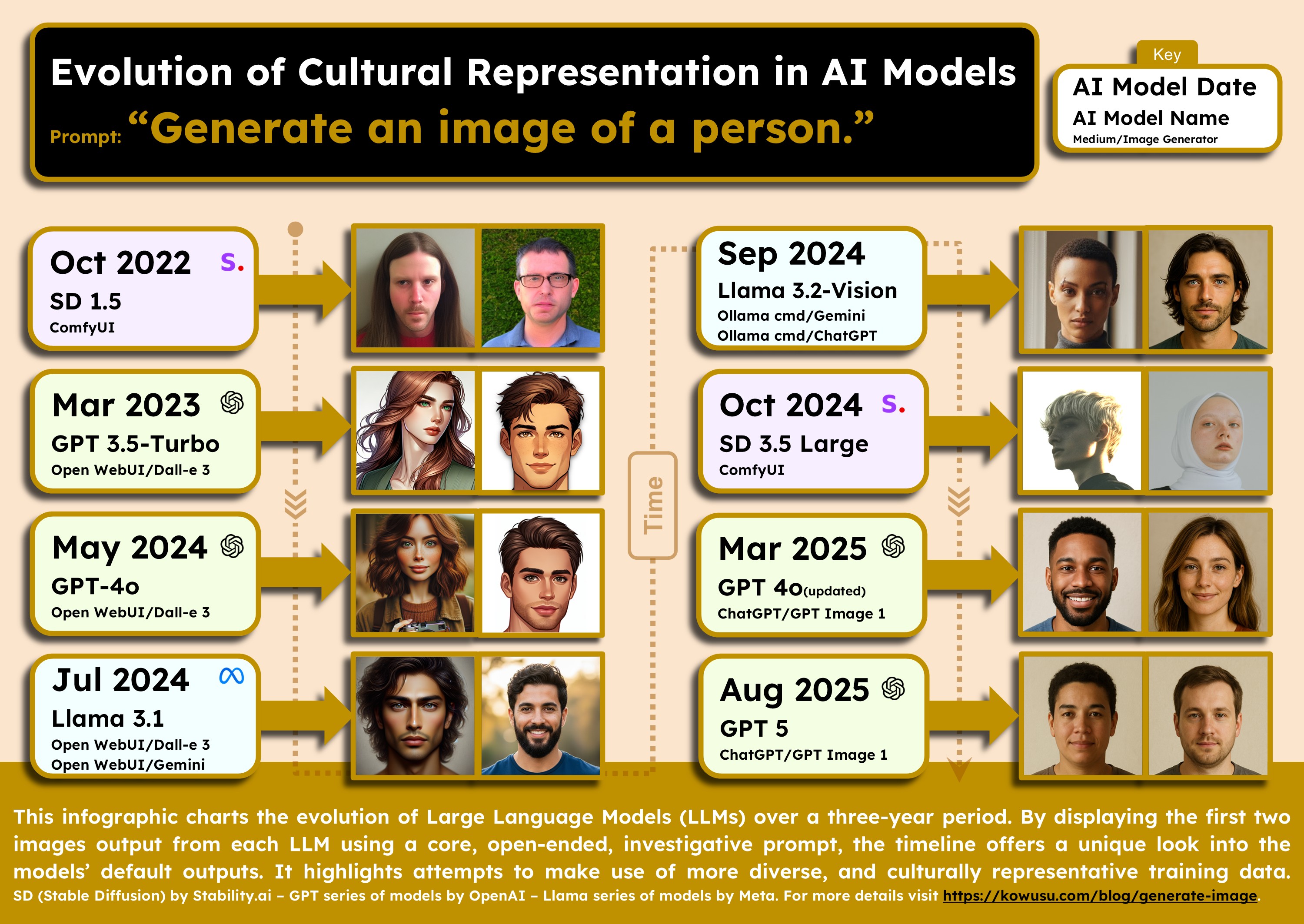
If you’re a person of colour, then you know that representation in tech has always been limited, not just in the workforce but in the actual tech itself. Resulting issues in tech are many, with examples being white balance in cameras, heart rate monitors in some early smart watches, and some facial recognition systems not working for those with darker skin tones. Technology intended for use by everyone, but where designs marginalise certain parts of society, or only consider certain groups, are problematic. Although there have been gains in rectifying issues in certain products, in tech, there is still a long way to go.
Is generative AI going to replicate these same issues on a large scale, or is this now an opportunity to fix it? I took a bit of a deep dive to find out what is happening, and my conclusion? Things are getting better, but we still have a long way to go! I decided to investigate the training of generative AI models by using a simple prompt ‘Generate an image of a person’. This simple, vague, open ended question allowed me to probe the underlying training of each model I tested. Without a specific instruction, the model itself had to come up with its own default. From that prompt, I took the first two image results from 8 different AI models, with release dates that spanned over the last 3 years. The results of how AI models have progressed are really interesting! Let’s take a look.
- Details
Read more: Evolution of Cultural Representation in AI Models